
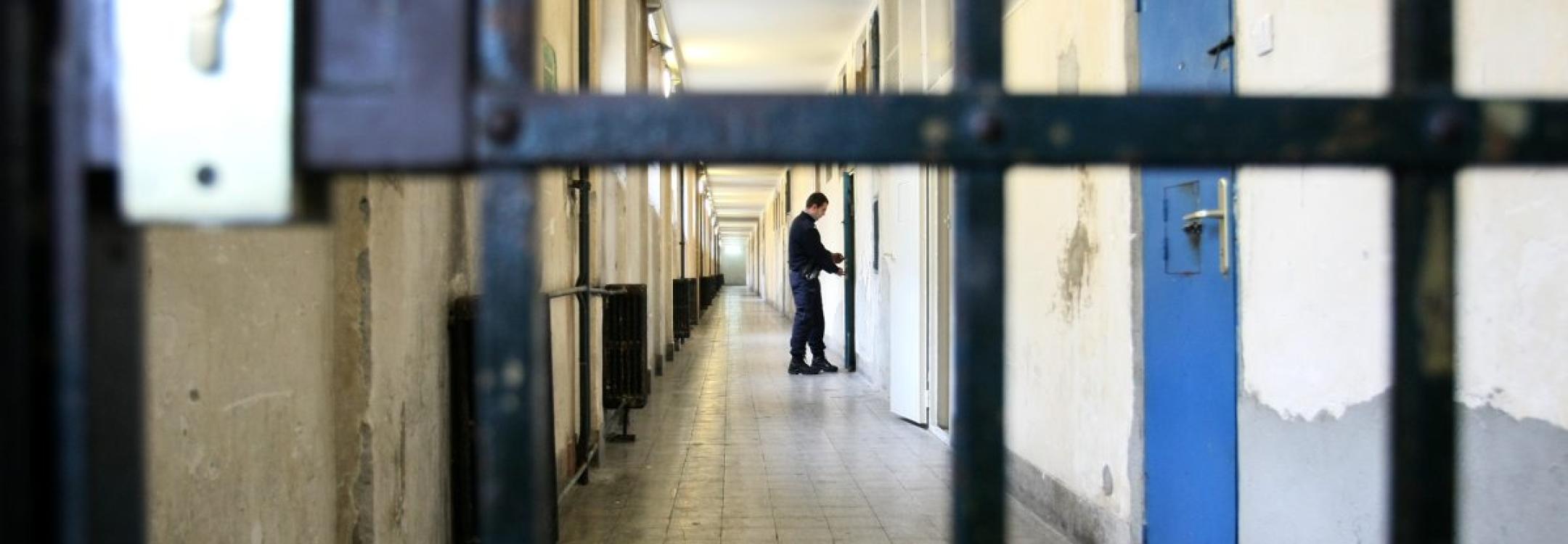
Experience of the National Prison Ombudsman’s Office of Argentina (PPN)
The Marcos de Paz Program, developed by Argentina’s National Prison Ombudsman’s Office (PPN), is one of the most consolidated and transformative interventions in the country’s prison system. Focused on preventing torture and promoting dignified living conditions, the program rests on a tool that is as simple as it is powerful: dialogue.
This text introduces the program’s approach and highlights the voices of those who make it possible: volunteer dialogue facilitators working inside prisons.
Why dialogue?
In the maximum-security units where Marcos de Paz is implemented, daily life unfolds in cellblocks. Each person deprived of liberty depends largely on the people they live with and on the internal “politics” set by the leaders of those spaces. In this context, what happens “on the inside” can change dramatically when people have safe, structured spaces to speak and be heard. Dialogue becomes a necessary tool for managing coexistence and reducing violence.
A similar logic applies to prison staff. Different shifts, teams and units’ function in different ways, depending on who works in them and who leads them. People can make a real difference when they have channels to act in line with Rule 38 of the Nelson Mandela Rules, which stresses the crucial role of staff in ensuring humane treatment.
In the most violent prison environments, Marcos de Paz develops systematic interventions aimed at humanising relationships and practices, inviting people to dialogue until they reclaim their voice. This is a form of preventive monitoring that seeks meaningful transformations in individuals, in the groups they belong to and in the broader prison community. Dialogue becomes a vehicle for taking responsibility, reducing harm and building more dignified forms of coexistence.
After more than thirty years of work in places of detention, the PPN has made this approach a permanent activity in several federal and one provincial unit, in line with its mandate as Argentina’s National Preventive Mechanism against Torture under Law No. 26.827.
What does it mean to “facilitate” dialogue?
“Facilitate” encompasses a broad set of practices and actions aimed at creating the conditions for dialogue, organizing it, and building it collaboratively. It also includes the work carried out in each meeting to ensure that conversations have a clear purpose and a specific atmosphere.
These meetings take place among peers and are given specific names depending on who is participating: Probemos Hablando with persons deprived of liberty, Concordia with people working in detention facilities, and Tejiendo Puentes with family members of detained persons.
Within Marcos de Paz, facilitation is understood as a profound social practice that requires trust in people’s capacities and a strong commitment to the program’s core values: freedom, humanity, equality, inclusivity, respect, confidentiality, shared ownership, continuous learning and a long-term perspective.
Facilitation teams support participants so that they can:
- respect and listen to one another.
- speak without fear and be heard without being judged.
- develop empathy and a sense of responsibility.
- regulate their emotions and reactions.
- find non-violent ways to prevent and resolve conflicts.
- cooperate and rebuild bonds;
- access more rights through the exercise of their voice.
- strengthen communication with family members.
To do this, facilitators train in three core competencies: teamwork, care of the dialogue space, and genuine listening.
Each circle of dialogue begins with a clear framework based on respect and confidentiality. Participants are invited to speak with intention, listen with attention, be mindful of the impact of their words and allow silence to be part of the process. From there, facilitation teams pose questions and propose activities that respond to the reality of each group. Playful and liberating dynamics are common, and spaces are opened where people can share stories, create, laugh and cry.
Although sessions are planned, the approach remains flexible and responsive to the constant changes and tensions typical of life in detention. The program works with whatever arises in each group, each time.
Why are volunteers and other institutions involved?
From the very beginning, there were people outside the PPN who wanted to support these processes. Including them soon became both natural and essential. Diversity of backgrounds and perspectives strengthened the teams, enriched the reflections and made the program’s method more coherent with its own message.
A guiding question sums up this logic:
“If we are not able to collaborate among ourselves outside prison, with what legitimacy can we ask people deprived of liberty and prison staff to listen to and respect each other?”
For the PPN, sharing this work with volunteers and professionals from other institutions —including the Prison Service— is an exercise in transparency, participation and collaboration, which are pillars of open government and of the program’s management. Thanks to these contributions, the reach and depth of Marcos de Paz has grown across different parts of the country.
Volunteers also made it possible to create “Tejiendo Puentes” (Weaving Bridges), a weekly virtual dialogue space for family members of people deprived of liberty.
Those who choose, freely and without personal gain, to facilitate dialogue bring a presence that often illumines and inspires the spaces they enter. Their participation reinforces a core conviction of the program: preventing torture and promoting humane treatment demands a broad, social and deeply human commitment.
Voices that sustain the dialogue
If dialogue is the central tool of Marcos de Paz, facilitators are its quiet driving force. They embody the program’s values and make it possible for words to circulate where silence, mistrust and violence have often become the norm.
Their testimonies offer a powerful window into the meaning of this work.
Why do we choose to facilitate dialogue?
- “It’s a way to reduce the violence that has become normal in prison, and to offer a tool to handle conflict through words.”
- “Promoting the right to speak is part of who we are. Dialogue is a vital way of relating to one another.”
- “In a place where the word was lost as a human right, facilitation is like training again the muscle of speaking, listening and empathising.”
“The circle transforms me, it humanises me. Something shifts in each one of us.”
What do we bring into the circle?
Facilitators describe what they bring as a mix of experience, sensitivity and honesty:
- “My life story. I am also the daughter of a person who was deprived of liberty.”
- “My personal toolbox, more than twenty years of experience in this context and, above all, attentive and empathetic listening.”
- “Respect for others’ words, and the commitment to hold a safe space where every voice can be recognised.”
“My willingness to be coherent, to bring both my light and my shadows, and to learn in every encounter.”
What do we take with us?
The circles not only transform those who participate from inside prison; they also transform those who facilitate:
- “I go home with the value of what was shared, and with learnings that only arise from genuine encounter.”
- “I always come back with more than I give: positive energy, a sense of freedom and transformation.”
- “I carry with me gratitude, trust and the certainty that we have truly listened to each other.”
One facilitator sums it up this way:
“I often think I’m going in to help… but I always leave with a deep sense of gratitude. The circle changes me.”
A volunteer facilitator shares:
“I go to a hairdressing workshop in prison. There was a sign that read: ‘Silence is for cowards.’ I immediately thought of the program: silence is also part of dialogue. I said to the teacher, ‘Sometimes we need silence to listen and to think.’ He agreed. I asked if I could put another sign underneath that said: ‘Silence is part of dialogue.’ He said yes. That simple gesture reminded me how deeply this work changes the way we understand words, listening — and each other.”
If dialogue is the central tool of Marcos de Paz, facilitators are its quiet driving force. They embody the program’s values and make it possible for words to circulate where silence, mistrust and violence have often become the norm.
Their reflections reveal why facilitation matters — not only as a method for reducing violence, but as a deeply human practice that restores dignity, voice and connection.
Why facilitate dialogue?
Facilitators consistently describe dialogue as a way to interrupt cycles of violence that have become normalised in prison life. Creating a space where people can speak, listen and be heard without fear is seen as both a right and a responsibility. In contexts where the word has been stripped of its value, facilitation becomes a way of rebuilding the capacity to communicate, empathise and relate to others as human beings.
For many, the dialogue circle is also personally transformative. Participation reshapes how facilitators understand themselves and others, reminding them that change is always reciprocal: the space humanises everyone who enters it.
What facilitators bring into the circle
Rather than technical expertise alone, facilitators emphasise presence, coherence and lived experience. They bring their own life stories, their capacity for attentive and empathetic listening, and a commitment to holding a space grounded in respect and safety.
Facilitation is described as an act of honesty — showing up with openness, recognising one’s own limits, and remaining willing to learn. This shared vulnerability helps build trust and makes dialogue possible, even in the most challenging environments.
What facilitators take with them
The impact of the dialogue circles extends well beyond the prison walls. Facilitators often leave with a deep sense of gratitude, enriched by what was shared and by the quality of the encounter itself.
They speak of returning home with renewed energy, trust in others and the conviction that genuine listening can open paths to transformation. The experience reinforces a shared understanding: while facilitators may enter the prison to support others, they are also profoundly changed by what they receive in return.
As one facilitator reflected, the dialogue circle consistently reverses expectations — what begins as an act of giving becomes an experience of learning, connection and mutual recognition.
Acknowledgements
The reflections in this text draw on the voices and experiences of volunteer dialogue facilitators of Marcos de Paz, including:
Analía Acevedo, Cecilia Pinto, Gabriela Ferreira, Milagros Barro, Sandra Arce, Sol Giannetti, María Noel Dondena, Verónica Simonini, Silvia Santillán, Estefanía Huaco, Luciana Pavón, Marcelo Álvarez, Sonia Mora, Axel Santa Cruz, Silvestre More, Lino Manuel Rodríguez, Fabio Marillan, Gerardo Vallejos, Diego Marillan and Marcos Fontan Guzmán.